
Science & Faith—Are They At Odds? Part 2
By Brandon Anchant, Senior Apologetics Intern There is a widespread misunderstanding about the role of science—what it is equipped to explain and what lies...

It is a widely held view that science and faith cannot coexist—that one cannot hold to an intellectual understanding of the field of science while simultaneously believing in a God that cannot be seen, heard, or tested. In this series, we are going to examine this claim to determine if this is merely an opinion or if it really is impossible to have a belief in God while studying and working in the various scientific fields. In this first blog, we will define the terms science and faith, acknowledge some common misconceptions, and touch on foundational issues to avoid getting caught in the thicket of distracting arguments.
First, we must define our terms. When we’re engaging in a conversation, whether it’s with an unbeliever or a believer, defining terms such as science, faith, or even God is important because these words can mean completely different things depending on who you are talking to.
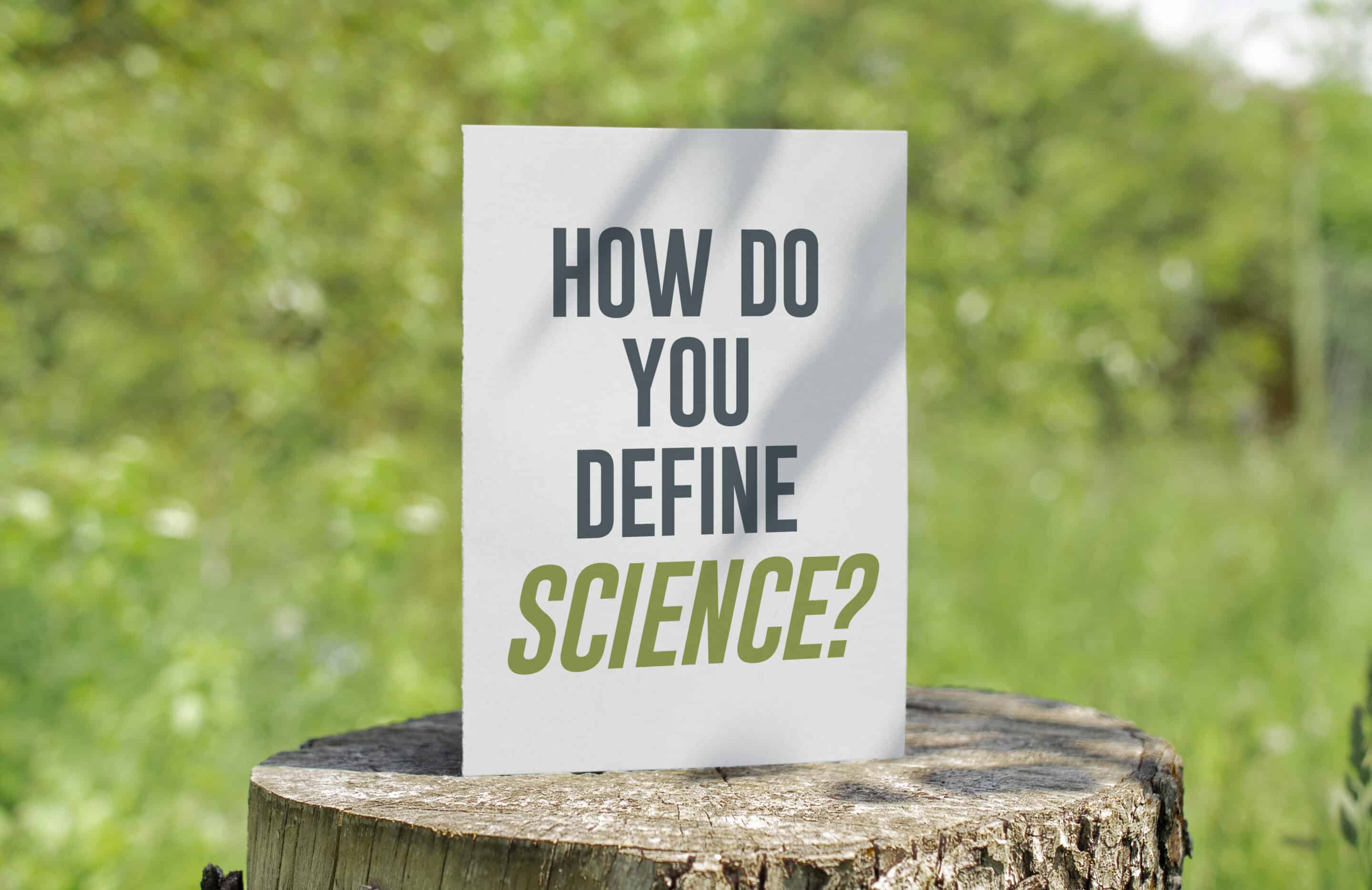
Pinning down a universal definition of science is difficult, especially with all of its philosophical complexities. But for the bulk of conversations, we are typically dealing with natural science rather than historical science. Natural science is the systematic pursuit of knowledge of the natural world through means of observation, interpretation, and evidence-based reasoning. Historical science, also known as forensic science, deals with origins or unobserved past events. Natural science tells us who the blood spatter on the carpet belongs to, but historical science tells us why or how that blood may have gotten there in the first place.
How many ways can you define faith? The skeptic assumes Christians place their faith in something for which there is no evidence. Is this the faith we have as believers? Of course not! Christianity, by its nature, is an evidence-based faith! 1 Corinthians 15:14 reminds us that if Christ has not been raised, then our preaching is useless, our faith is useless, we’re most of all to be pitied, and we’re still dead in our sins. Blind faith is never scripturally supported.
The skeptic may say, “Isn’t your faith blind if you didn’t see Jesus rise from the dead with your own eyes?” Think back to Luke 16:19–31. In this parable, the rich man dies and is in hell, and he is pleading that God would raise Lazarus from the dead and send him to the rich man’s family to warn them of the fire to come. Abraham responds, “They have Moses and the Prophets; let them listen to them.” The rich man replies, “But if someone from the dead goes to them, they will repent!” Abraham responds once more, “If they do not listen to Moses and the Prophets, they will not be convinced even if someone rises from the dead.” Even if a skeptic saw someone rise from the dead, he could still refuse to believe. God has left us with enough cumulative evidence to come to the rational conclusion that not only did Jesus of Nazareth exist in history, but that something earth-shattering occurred in the first century. The Jewish carpenter who claimed to be God actually rose from the dead. Biblical faith is deep-seated assurance and trust in the truths found in God’s Word. It is the confidence in what we hope for and the assurance about what we do not see (Hebrews 11:1). It is more than just belief; it is the active possession of God’s promises today as if they have already been granted to us.
When we define God, it’s important to distinguish between the God of the Bible and any human conception or vague representation of God. The God of the Bible can only be defined by the attributes and characteristics we see in scripture. Oftentimes, the critic’s definition of God is based on his own ideas rather than an objective understanding. When we say God, we are referring to the God of Israel who exists as Father, Son, and Holy Spirit. He is self-existent and self-sufficient—perfectly holy and righteous.
Defining our terms helps us begin to clear the way for more effective communication about the relationship between science and faith. For instance, the unbeliever may make a bold claim such as, “Science doesn’t care what you believe.” This should immediately prompt us to ask, “Well, what do you mean by science?” Clarifying questions do a couple of things. They test the one making the claim to see if they really hold to what they are saying and flesh out what an individual really believes, instead of hiding behind a parroted statement, helping us get down to the root issue.
Even though we have the terms defined and sorted out, this won’t solve all the common misconceptions revolving around science and faith. I was speaking with a member of the climbing gym that I manage. He’s an atheist who works in the field of biology, so I found it fitting to have a discussion with him about this topic. At the time, I was reading Dr. John Lennox’s book Can Science Explain Everything? So, I asked him the same question. He responded, “I think for now you can believe in God and do science. But as science continues to give us answers, it will eventually make the need for God obsolete.” If you’re not ready, an answer like this could disorient you because, in one way, it’s affirming your position, but then in the same breath, it completely contradicts it. But remember, if we ask clarifying questions, we won’t get stuck.
His argument falls into one of the common misconceptions called the “God of the Gaps” argument. This basically means that where there are gaps in our scientific knowledge throughout history, Christians would conveniently use God as a pre-scientific placeholder until we could have scientific proof for that which we had not yet been able to explain. We can see examples of this in history, such as eclipses being confused with supernatural omens from gods, the belief that lightning was caused by a god throwing thunderbolts, or that illnesses were thought to be caused by evil spirits. And then, once the shining hero, Science, came to the rescue, it gave us a natural explanation for what was once thought to be only supernaturally explained.
The ability to use logic and reason to evaluate evidence in the first place can only be found in the biblical worldview.
Another misconception is, “Faith rejects evidence!” as if faith in God somehow throws all empirical evidence out the window. Now, we could point out to the skeptic that it takes more faith to believe that everything came from nothing purely by accident. One important thing to note here is that the ability to use logic and reason to evaluate evidence in the first place can only be found in the biblical worldview.
If God does not exist and all we are is matter in motion, then why should we be able to trust the reliability of our minds? If this universe is just the product of a random, mindless, unguided process, then there would be no consistency, no ability to conduct experiments, no sense of right and wrong when it comes to scientific conclusions or ethical obligations, because in the atheistic world of materialism, there is nothing immaterial. Therefore, no knowledge, no logic, no morals, no science.
Let’s return to the conversation with our rock-climbing biologist friend. Do natural explanations remove the need for supernatural ones? I would say they most certainly do not. These are two very different categories.

If I were to show my friend a painting and ask him to scientifically identify everything in the painting, he could run his tests and determine that the paint was oil-based instead of water-based or acrylic. He could determine the exact colors. He could even determine the makeup of the canvas on which the painting was created. Although he was able to offer a natural explanation for the existence and makeup of the painting, we would not conclude that the artist doesn’t exist, or that upon the discovery of the materials, there is no need for a painter. That would be foolish.
There are two explanations for the existence of the painting. You could explain how the paint bonds to the canvas and how the mixing of colors could produce new colors, or you could say that the painter was inspired to paint. Both explanations are correct, and yet they don’t reject one another. They complement one another. To give a scientific explanation for the natural world does not mean that you must reject the existence of a God. The discrepancy boils down to worldviews.
Let’s return to the conversation with our rock-climbing biologist friend. Do natural explanations remove the need for supernatural ones? I would say they most certainly do not. These are two very different categories. If I were to show my friend a painting and ask him to scientifically identify everything in the painting, he could run his tests and determine that the paint was oil-based instead of water-based or acrylic. He could determine the exact colors. He could even determine the makeup of the canvas on which the painting was created. Although he was able to offer a natural explanation for the existence and makeup of the painting, we would not conclude that the artist doesn’t exist, or that upon the discovery of the materials, there is no need for a painter. That would be foolish. There are two explanations for the existence of the painting. You could explain how the paint bonds to the canvas and how the mixing of colors could produce new colors, or you could say that the painter was inspired to paint. Both explanations are correct, and yet they don’t reject one another. They complement one another. To give a scientific explanation for the natural world does not mean that you must reject the existence of a God. The discrepancy boils down to worldviews.
We are ultimately in a battle of worldviews. Which worldview can account for things such as knowledge, logic, morality, and science? The natural worldview’s explanations reach only as far as nature itself, but the biblical worldview can get into the deeper metaphysical and philosophical issues because it’s not bound by the box of the material world.
Our worldviews are comprised of presuppositions—foundational beliefs or assumptions that we hold to be true before we interpret or reason about anything else. As Christians, we presuppose that the God of the Bible is the author and creator of all things and He upholds everything by the word of His power (Hebrews 1:3). He is consistent, ultimate, logical, and morally perfect. This belief shapes our view of science and the world we live in. The naturalist’s views are also shaped by their presuppositions that everything came into being from nothing by nothing. Although science assumes order, logic, causality, and morality, science on its own cannot account for these things.
So whether it’s science vs. faith, pro-life vs. pro-choice, or Darwinian evolution vs. Creationism, it all comes down to a battle of worldviews. Which worldview makes sense for science to be possible and meaningful?
In the next blog, we will break down three common misconceptions: Science has disproven God, faith is irrational, and evolution vs. creation is the only issue.

Brandon is a Rock Climber, General Manager of Reading Rocks Climbing & Fitness, and an aspiring Apologist/Evangelist. He has been an intern of Dr. Mark Farnham with Apologetics for the Church since 2024. He is a public speaker, podcaster, and musician, and currently serves in his Adult Bible Fellowship at Calvary Church Lancaster.
By Brandon Anchant, Senior Apologetics Intern There is a widespread misunderstanding about the role of science—what it is equipped to explain and what lies...

Session Recordings & Handouts In this post, we're sharing the session recordings and handouts from our recent conference. In case you missed it, on March...

Book Recommendations On March 7, 2026, Apologetics for the Church hosted the Answering the Big Questions conference at Ephrata Community Church in Lancaster...